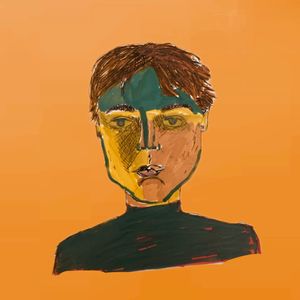
EN: Alright, so this is a conversation with Sekoya Sleeth where we are talking about arranging and working on both the first I Made This Album on Anti-Psychotics and the reimagined one. So thanks so much for doing this Koya, and why don’t you tell us a little bit about yourself and your music.
SK: Okay, well firstly thank you so much, it’s always fun to have little catch-ups and talks like this. Well to introduce myself, besides having worked with Ess on some songs for a couple albums, now I do a lot of compositions of my own. I usually write in a different sphere of classical music or jazz, so this has always been fun to write in a completely different idiom or medium than I typically do.
EN: Yeah absolutely, had you arranged anything before?
SK: Well yeah, I had for some personal projects and school and stuff, and I maybe had done a couple of small projects here and there, but I think working with you was the first time I had worked on a project that would be some big project released to the public.
EN: Okay, cool! So like my main question I really want to talk about today was how was your experience working with me and working on I Made This Album on Anti-Psychotics a year ago, because you were a really big part of… really the whole thing, because we talked a lot as it came together. You arranged three of the songs “Songs in Major Keys, “New York My Darling” andddd, why am I forgetting the third song?
SK: “Home.”
EN: Oh and “Home”, yes. So what was your experience with that?
SK: Okay, well I think at that time we had started becoming friends but we didn’t know each other too well, so I think each time, if I recall correctly, you would send me pretty much the completed song, though I think sometimes I heard various iterations as they were being-
EN: yes!
SK: -written. I think it was at first very much like writing letters, you know? Like in the old days before phones or email and stuff, like people having to read a whole letter and then have to write a response to that, in like, there would be this time in between, especially on my end. I think you’re a much faster writer than I am. So I would have this letter from you, which would be your song, and then I would kind of have to go through it and try to think of a way to respond to it. I think in that time we were getting to know each other better. So a lot of times it was me… Cause I think these were some of your first songs right?
EN: yeah
SK: So I didn’t really yet know what your sound was, cause it was your first album. So I think my response instead of being like, fitting your style, was to take inspiration from what you wrote and adding my own additions, my own dialogue with it. When I think back to “Songs in Major Keys” I remember some spots in it where I was like “oh, is Esther going to be okay with this weird harmony I did? And like this weird orchestration?”
EN: And if I can interrupt, I’ve gotten so much good feedback about the “Songs in Major Keys” arrangement, but that’s what I based the whole album sonically on, arrangement wise. I had written most of the songs at that point, but that was the first song I recorded and I was like “welp! This is what we’re doing!” So that turned out to be a really good thing because I still love that arrangement. Do you still look back on that one and think “yep, I did a good job?”
SK: I still really like that arrangement. There’s one arrangement on the first album I’m not as happy with that I did, but I think out of the three that I did I’m still pretty happy with “Songs in Major Keys”
EN: And we’ve talked about this! I think the arrangement you’re not as happy with is “New York My Darling” which I actually listened to today; listened to my own arrangement like a dork…
SK: I do that all the time.
EN: I really like it still! I don’t really like how I panned things, but I like the arrangement a lot.
SK: Well I’m glad you like it! I think “Home” had a little bit of this, but less extreme than “New York My Darling” but I think there was a sound in my mind’s ear from what we talked about with each other, and I don’t think I captured it, like with “Home” for example, I think what you gave as a suggestion was to take some inspiration from Chopin?
EN: Yeah
SK: And I remember, I think, still I went romantic piano, but I listened back to it and while I still like the “Home” arrangement I don’t think it captured what I think I wanted to capture in my head, and maybe it’s just hard to imitate Chopin.
EN: Yeah, and for everyone reading this, every single time Koya sends me an arrangement it is nothing like I expect it to be, and then every time I send him back the finished product it is nothing like he expects it to be.
SK: I know I love that. I love how what we hear and what’s the sheet music is nothing like what the final project is, which I think is what’s really cool about them.
EN: It is really cool! And I’m quite fond of that first album, but I kind of wanted to reimagine it and you were also a giant part of the reimagining. And we had this conversation a couple months ago about how we kind of didn’t collaborate as much on my next two albums, and I kind of wanted to get back to that.
SK: Yeah, I missed that.
EN: I missed it too! And I think you arranged five songs on this album, let’s see there's “New York My Darling”, “The Only Way Is Up,” “Nineteen,” “I Can’t Trust My Mind we both arranged, and the clarinet part to “Songs in Major Keys.”
SK: And I think what was fun with this newer album was the diversity in processes we went with arranging it, because it was a lot more collaborative this time around, than the first album. Because oftentimes I think that time around I would ask you to give me a transcription too.
EN: You did.
SK: Because I did not have the brain capacity or patience to make the transcription myself at that point… But I think in this case, the reimagined album, I was able to base “New York My Darling” off of what we did originally-
EN: And oh my gosh! No one has heard the new version of “New York My Darling” but it’s so good!
SK: The thing about the reimagined album, because the first one I did for it was “The Only Way is Up” right?
EN: Yes.
SK: And I think that one I did pretty much the way I did the first one. I listened to the recording, I think I transcribed it that time around…
EN: You did.
SK: But I, I think, at that point because you had done in between albums, and we’ve also become much closer friends since the first time. Because I think when you did the first album, had we only met in person once?
EN: We had only met in person once, and also I think the thing with this newer one, and this kinda segues into my next one about how our collaborative process has changed, but we are much more honest with each other now.
SK: Oh yeah.
EN: Which I think has been for the better, and like, I kind of wanted to talk about our overall creative process, which we’ve already touched on, and how that kind of culminated in us writing and collaborating on this really beautiful song “Nineteen” which is near the end of the album, and I think where that kind of started is collaborating on “I Can’t Trust My Mind’s” arrangement.
SK: Yeah that’s what I was going to say, that I wanted to maybe touch on that one first.
EN: And yeah, that one is out now to listen to and the way we did this was so funny. We were on facetime and me or you would have an idea, and I had just recorded the melody line to the click track, with nothing else on it. We would have an idea, and we would hang up and I’d go record it, because I am very fast at recording and everything.
SK: You are very fast.
EN: And we’d call back and listen to the progress… and we did that on and off for an hour or two!
SK: Yeah, and I’d be like, “what if you did this? Or this would sound cool or maybe this doesn’t work as well, or wow, this really works”
EN: Yeah, and for everyone who doesn’t know, Koya’s in California and I’m here in Ohio. So, this was a long distance, on the spot, arrangement while I was recording, and I adore the way it turned out. And actually, I was on an airplane, and I wrote these lyrics to this song called “Nineteen” about the year I was nineteen, and kind of the end of that year, turning twenty. I sent those lyrics to Koya and was like “could you write some music to this?” Do you want to talk about how we kind of wrote the music and you tweaked the lyrics a little bit?
SK: Yeah well I think when you sent me the lyrics and I started playing around on the piano, and also I guess to preface so it’ll be more clear to those reading, obviously you play the piano and sing, I’m primarily just a pianist. I’d love to get more comfortable with singing, but I’m primarily just a pianist. So, when working on it I think I was approaching it… Well I wanted to match what other songs you had worked on. And the voice you had been developing. And I found something on the piano that really resonated with your lyrics, and I remember sending them to you and it was something like “I think this is a really good piano part” sort of thing… but I can’t really think about the melody. Or, I think your melody would be a lot more authentic to the lyrics.
EN: Yeah, and we also figured it out over facetime. We both sat at our pianos and worked through what we thought the melody and chord progression would be, we used Koya’s piano part and Koya came up with this pretty sick chromatic line sort of deal.
SK: I love chromatic stuff way too much, I’m a nerd.
EN: It’s a really interesting chord progression in the sort of second half of the verses and I adore it so much.
SK: Yeah what I also think was fun about that progression was that I had this idea with it, but I think I maybe miscommunicated it? Because you did this really extra spicy chord, which was based on what I was talking about, but was even more intense than what I was trying to suggest.
EN: Yeah, I think I did maybe the major seventh instead of the minor seventh.
SK: Yeah, it was like a diminished triad with a major seventh, sorry for being so technical. But it just had this extra tension to it. And we just went with that. It was cool because you were kind of just riffing off of my thing and we just keep riffing off of each other.
EN: Yeah, and I just want to say in conclusion to this conversation, Koya is far and away my favorite person to collaborate with, everything is so fun and he always surprises me with what he comes up with.
SK: You always surprise me too and I love it.
EN: Yeah, cause I think these arrangements- I Made this Album on Anti-Psychotics and the reimagined version wouldn’t be what they are without Koya’s arrangements so I’m very happy about that.
SK: Well thank you so much, I look forward to future collaborations.
EN: Thank you so much for doing this Koya.
SK: Thank you for having me!
EN: I hope one or two people made it to the end of this, this was fun!
SK: Me too, thank you!